
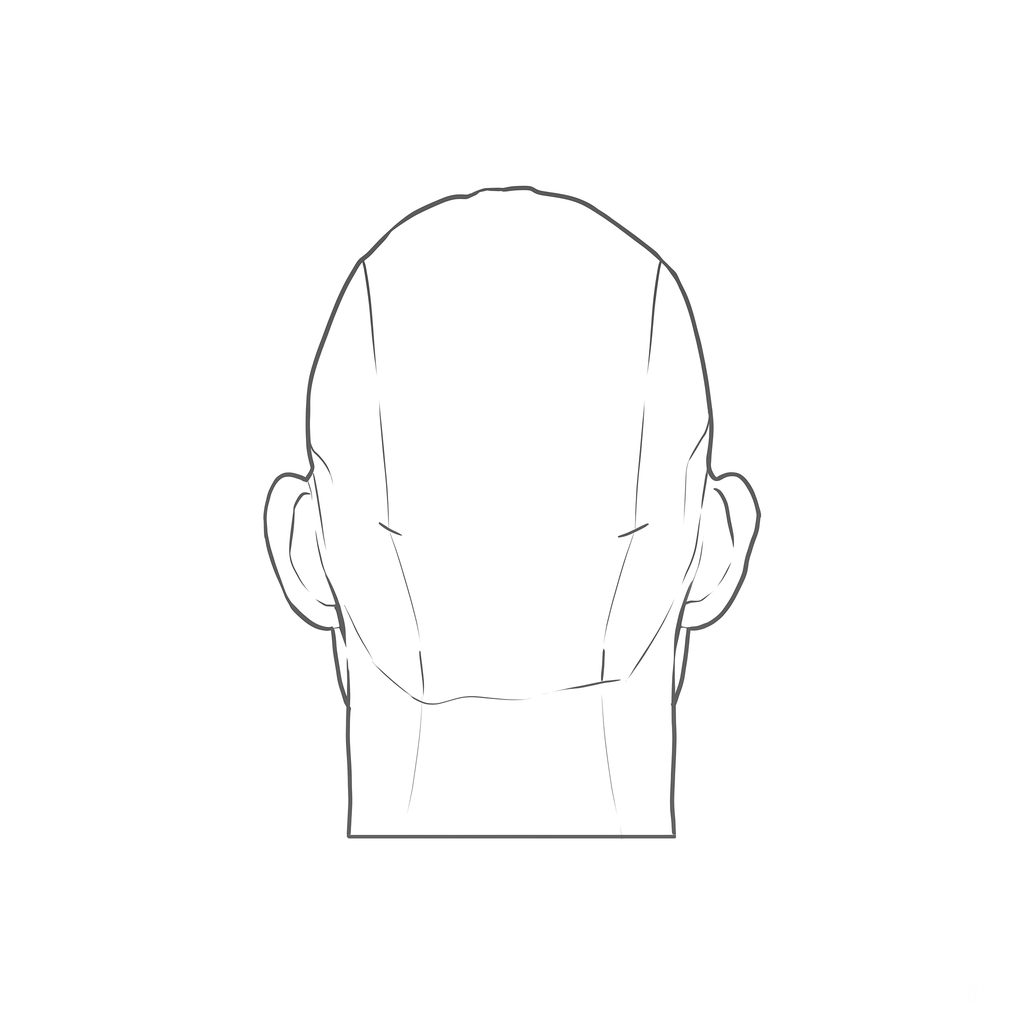
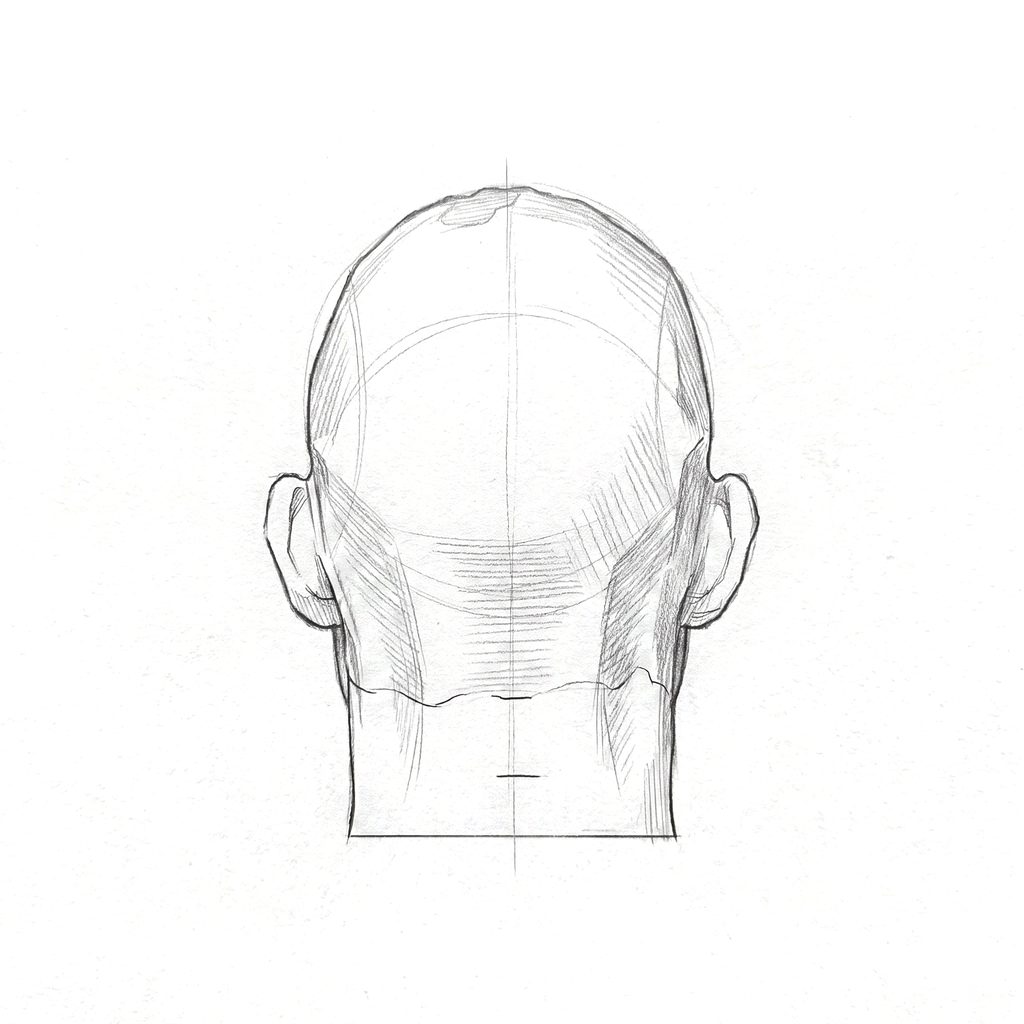
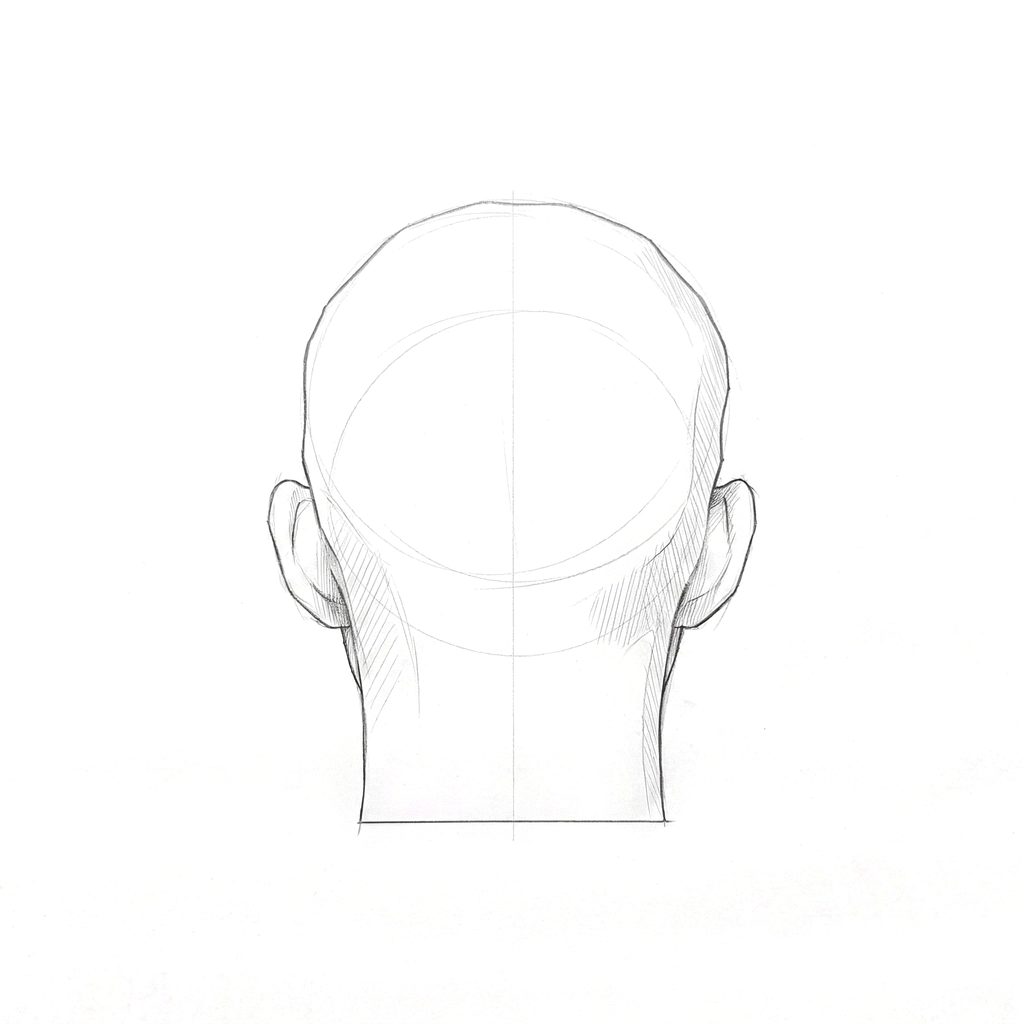
180 degrees back view head reference
Hard plane at 180 degrees. Compare the line drawing with the tonal study.
Drawing this angle
At 180 degrees, draw the back of the skull as a volume with a definite width and height. Compare its widest point with the narrower junction at the neck. The ears, where visible, provide useful checks on level and symmetry, but measure their actual projection instead of giving them identical shapes by habit. Hair or surface detail can disguise the underlying outline, so begin with the largest continuous mass.
Look for the change between the rear skull and the side planes. In a line drawing, that change may have little or no internal mark; the tonal plate can help you locate it. Keep the neck attached to the underside of the head and compare its width with the cranial mass above. Try blocking the view with a single outer contour and one value for the neck. Add internal marks only when they explain a surface change you can point to in the reference.
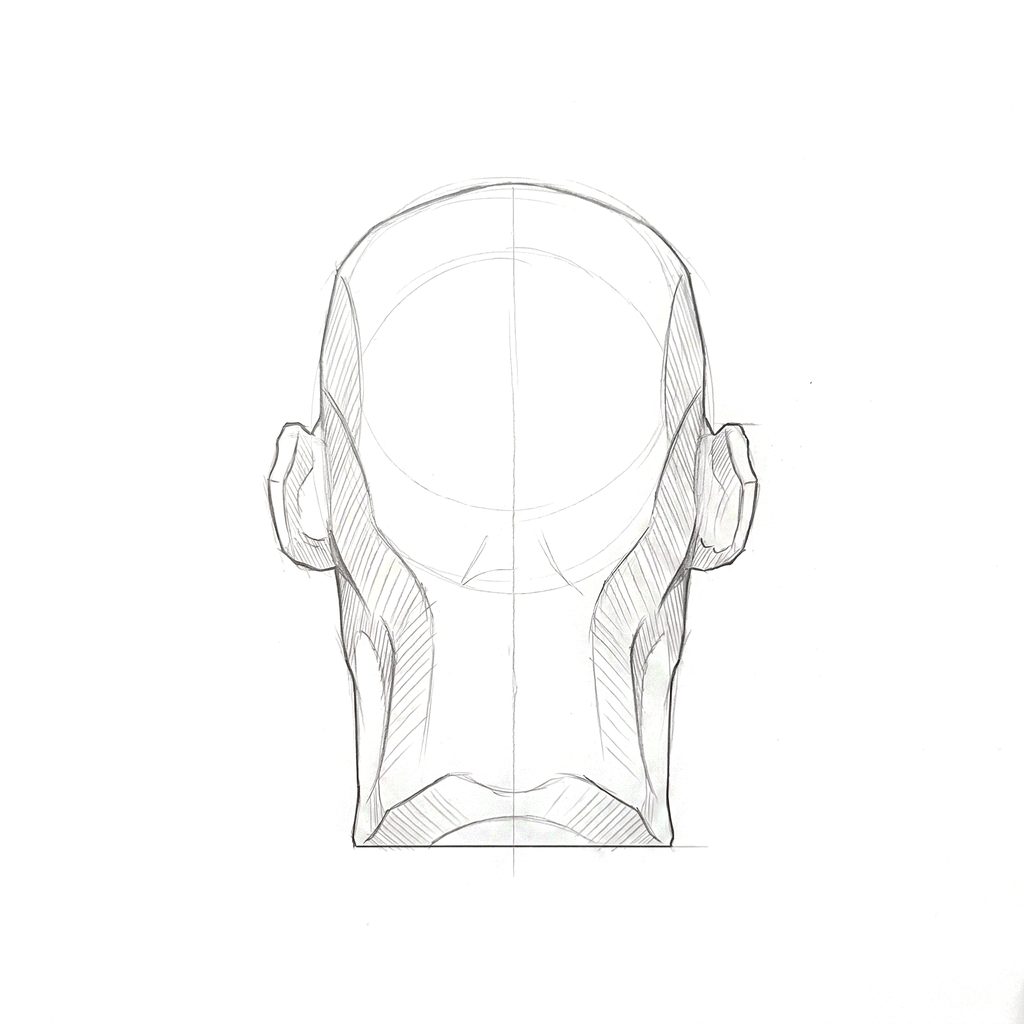
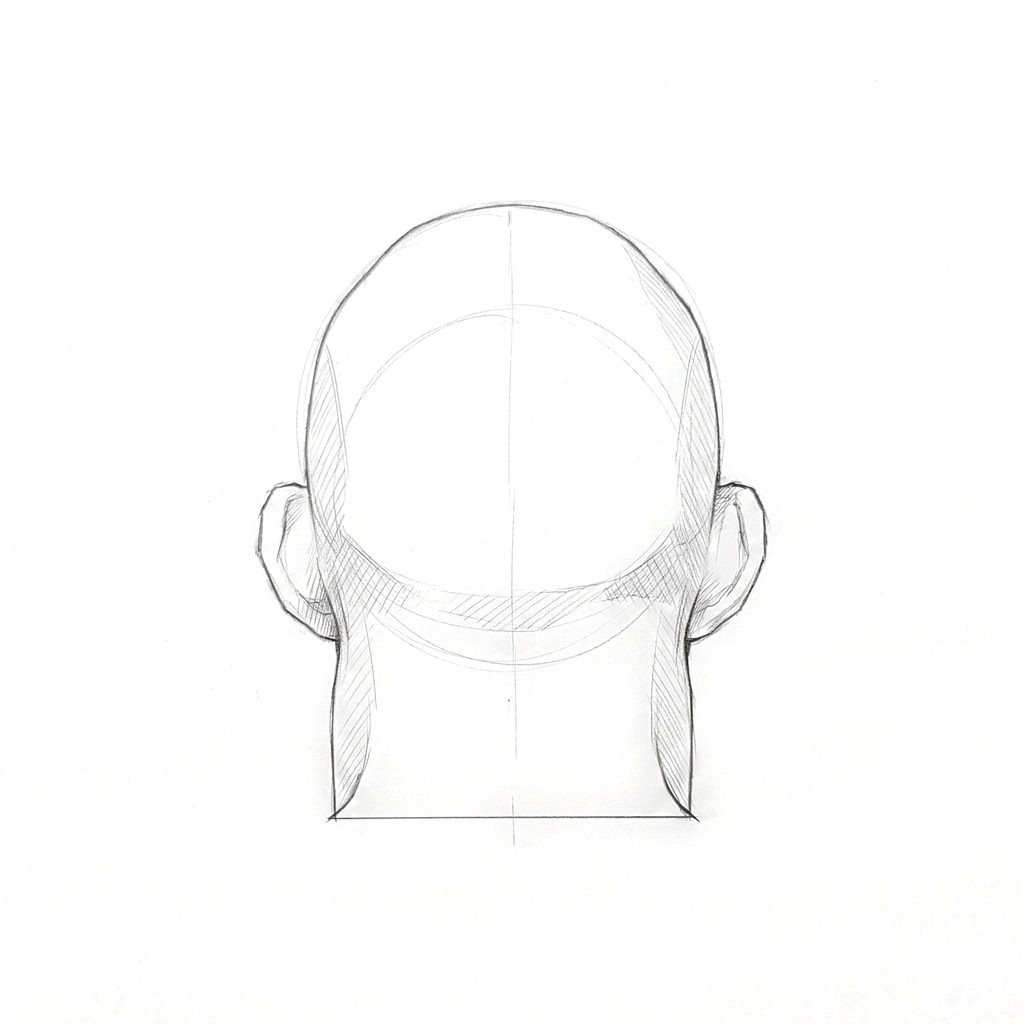
Compare all four heads
Keep drawing
Try the free tonal sampler, or see the line and tonal studies in Head rotation volume 1.