Head from below reference: the face at a low angle
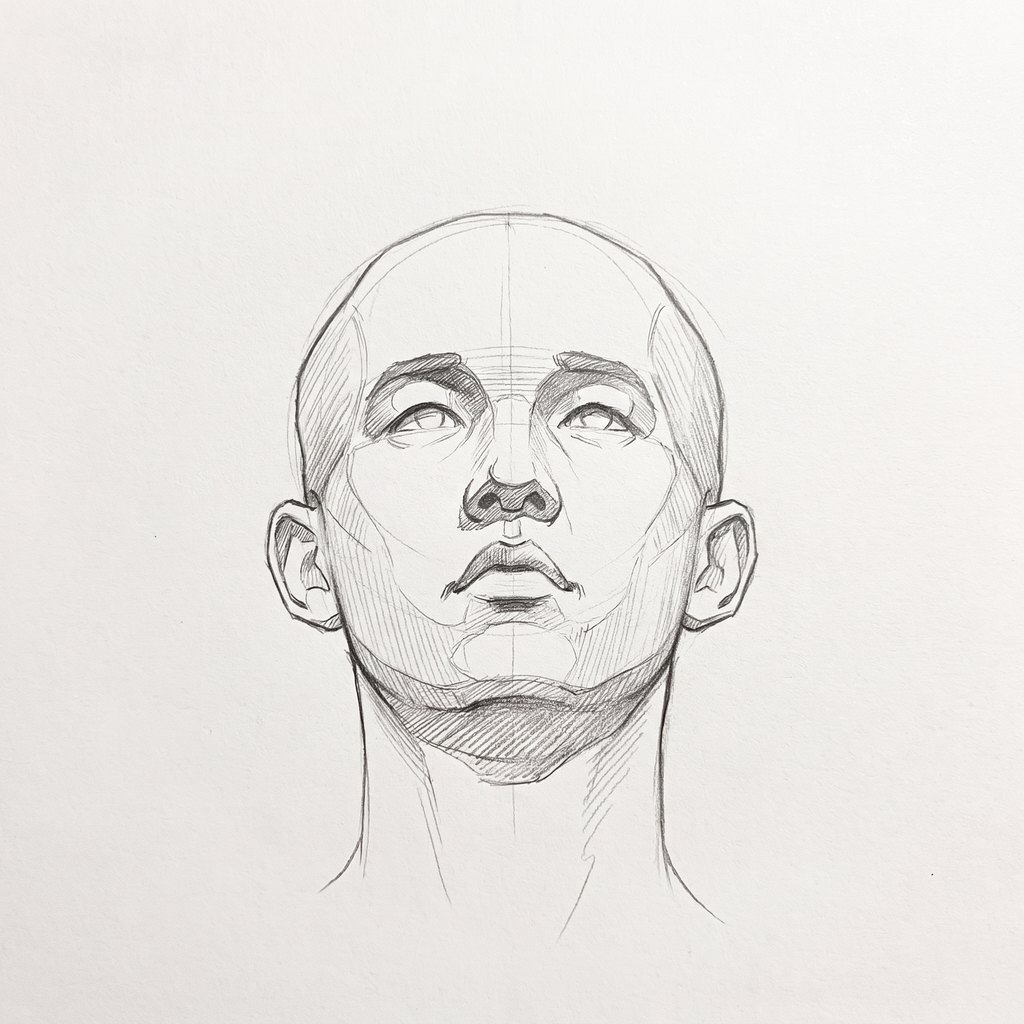
Every other plate in this library is drawn from a level camera. Here the camera sits 20 degrees below the head and looks up, the view you get of a head that tips back, a figure on a stage, or a character drawn from a low angle. Two study heads go around the turn: the minimal head and the heavy jaw.
What changes from below
The rings you draw around the head for the brow and the eyes now curve upward in the middle, like an arch. Their ends drop as they wrap around the sides, so the ears sit lower than the eyes instead of level with them.
The underside of the jaw and chin turns toward you as a plane of its own, and the front of the neck grows longer. The nose base and the nostrils show, the nose looks shorter, and the space between the nose and the mouth closes up. The forehead shortens and the top of the skull drops out of sight behind it.
In the profiles the change is smallest: the face keeps its outline and the head looks close to level, with a little more of the jaw underside showing. The three-quarter views show the low angle most clearly.
Minimal head, seen from below
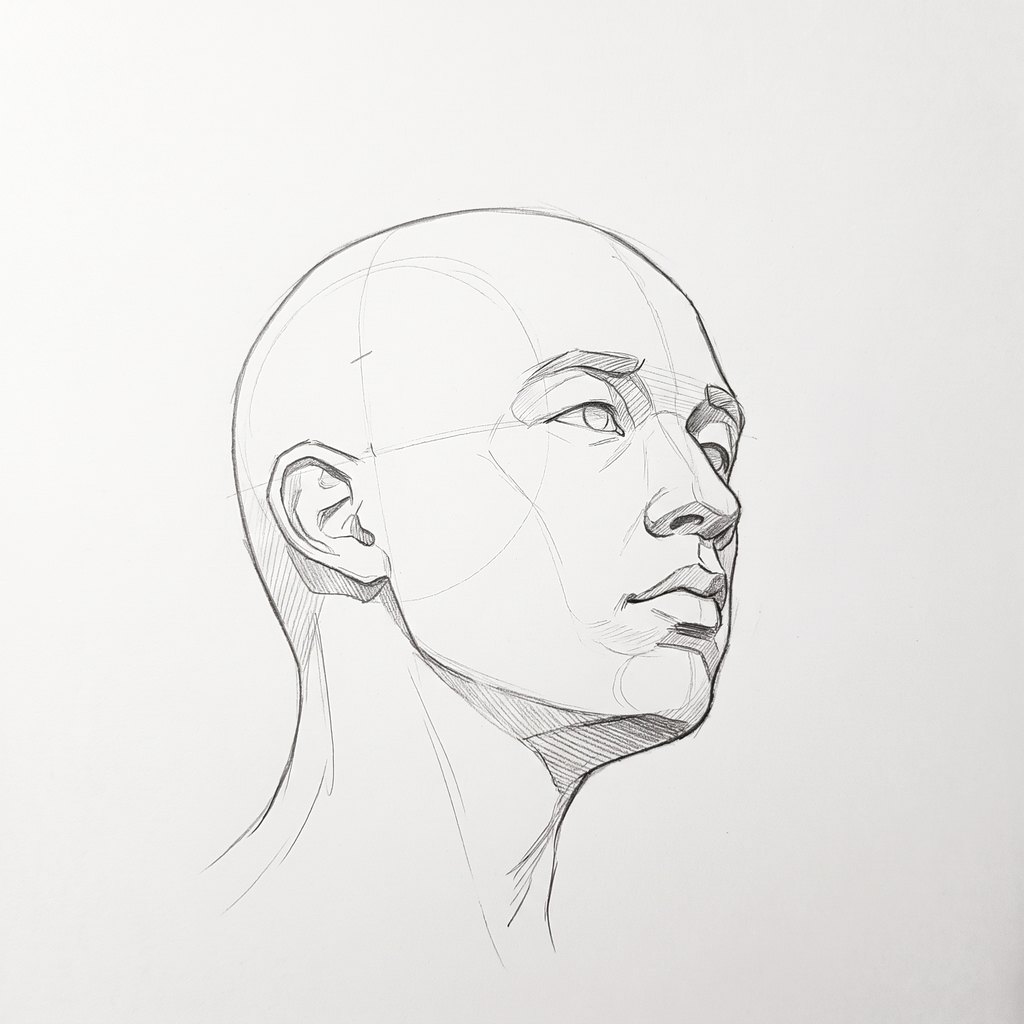
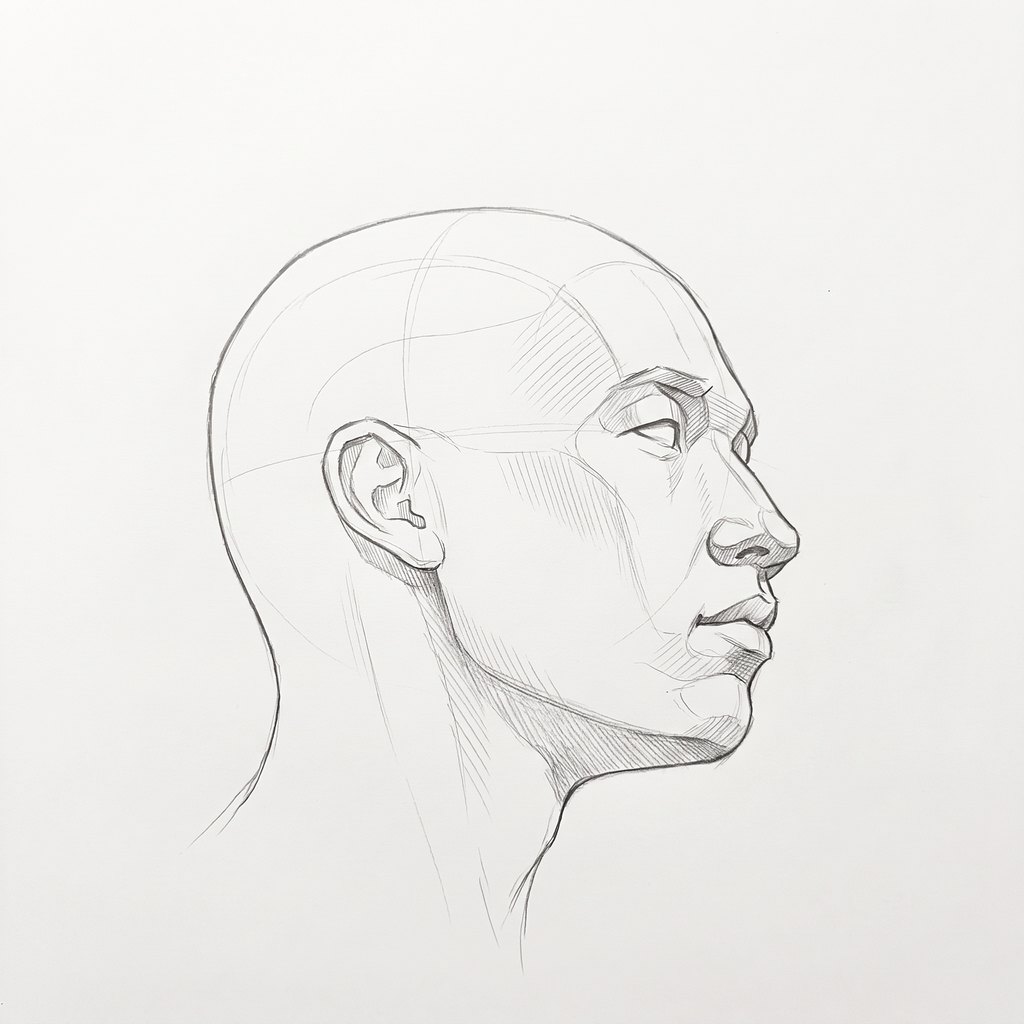
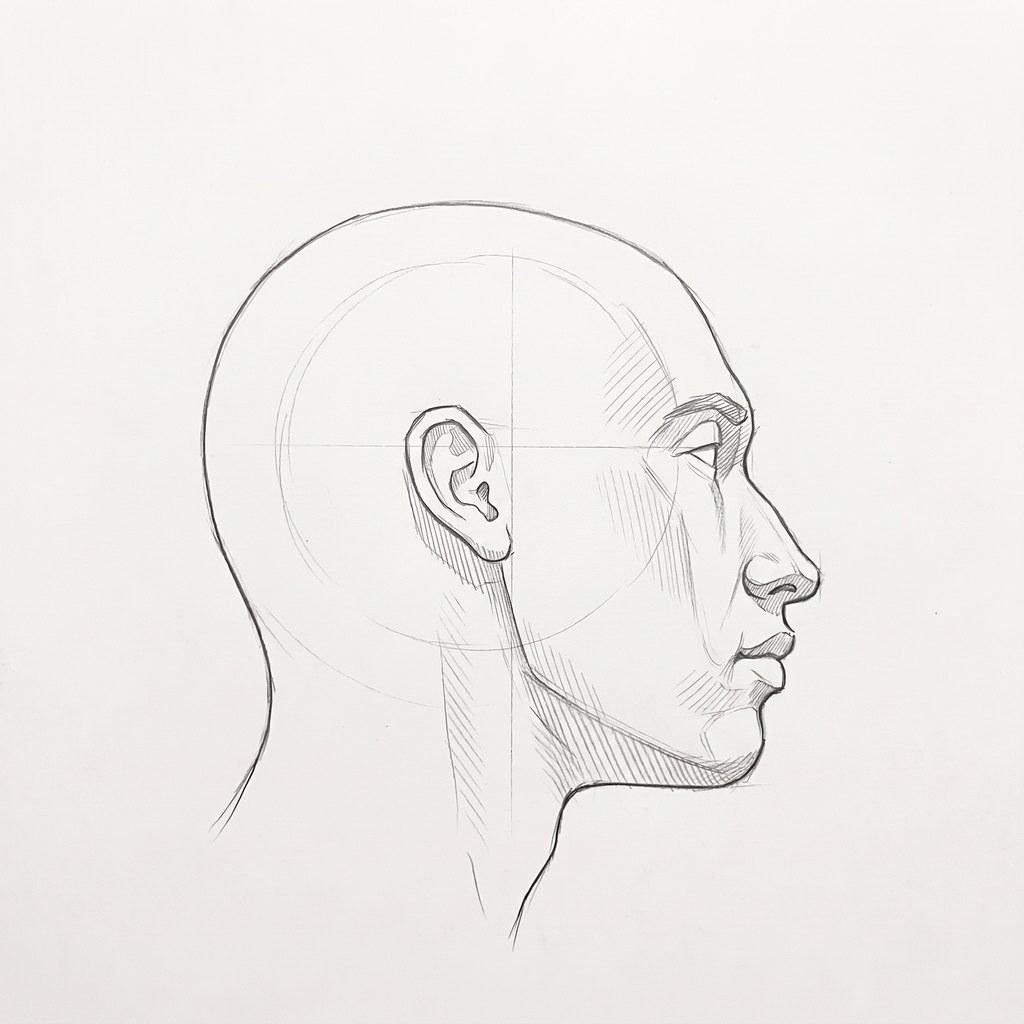
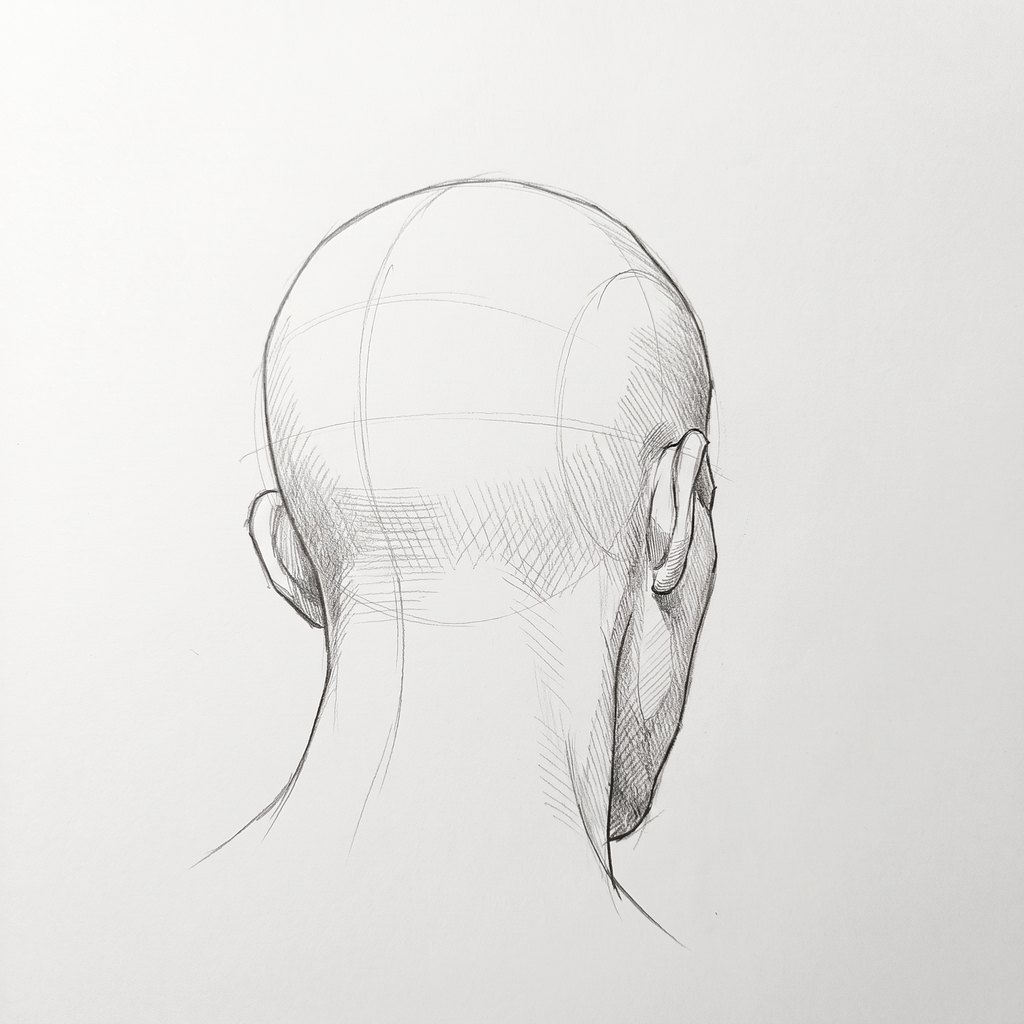
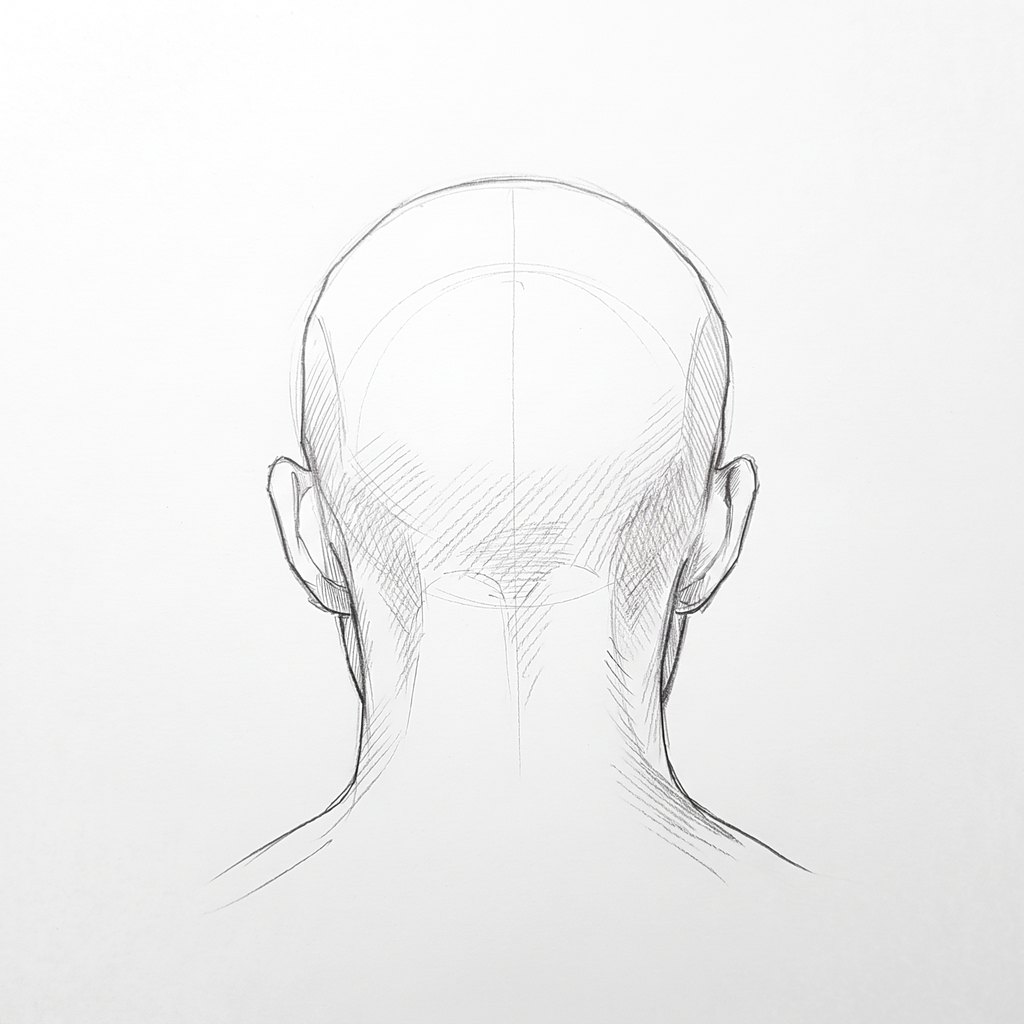
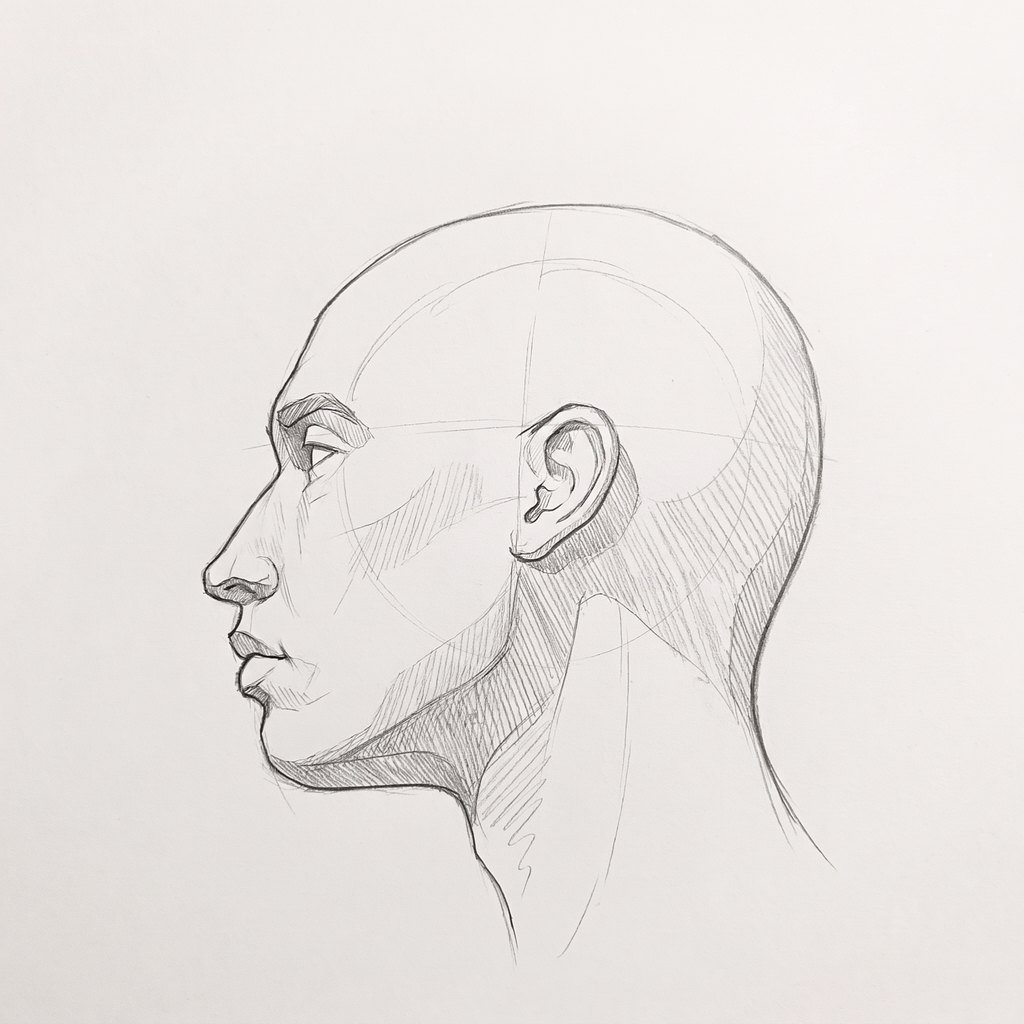
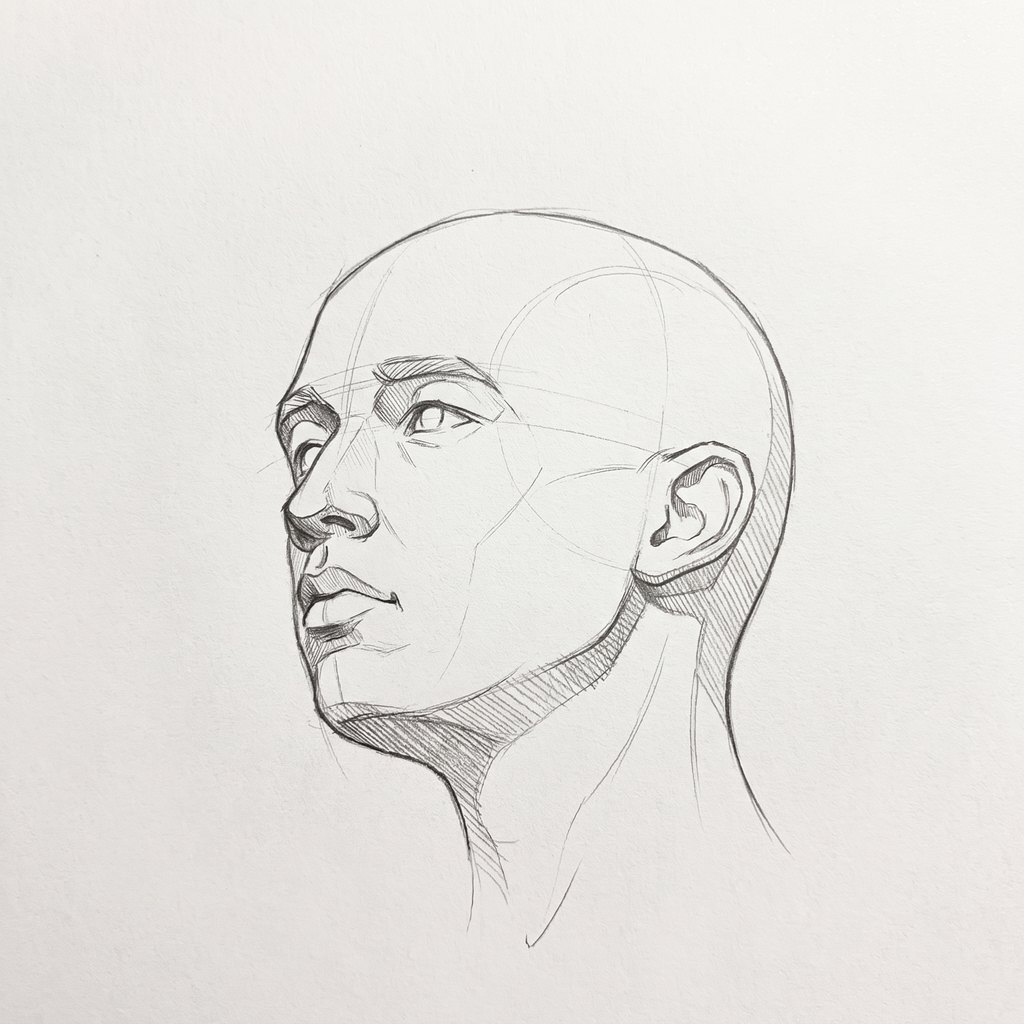
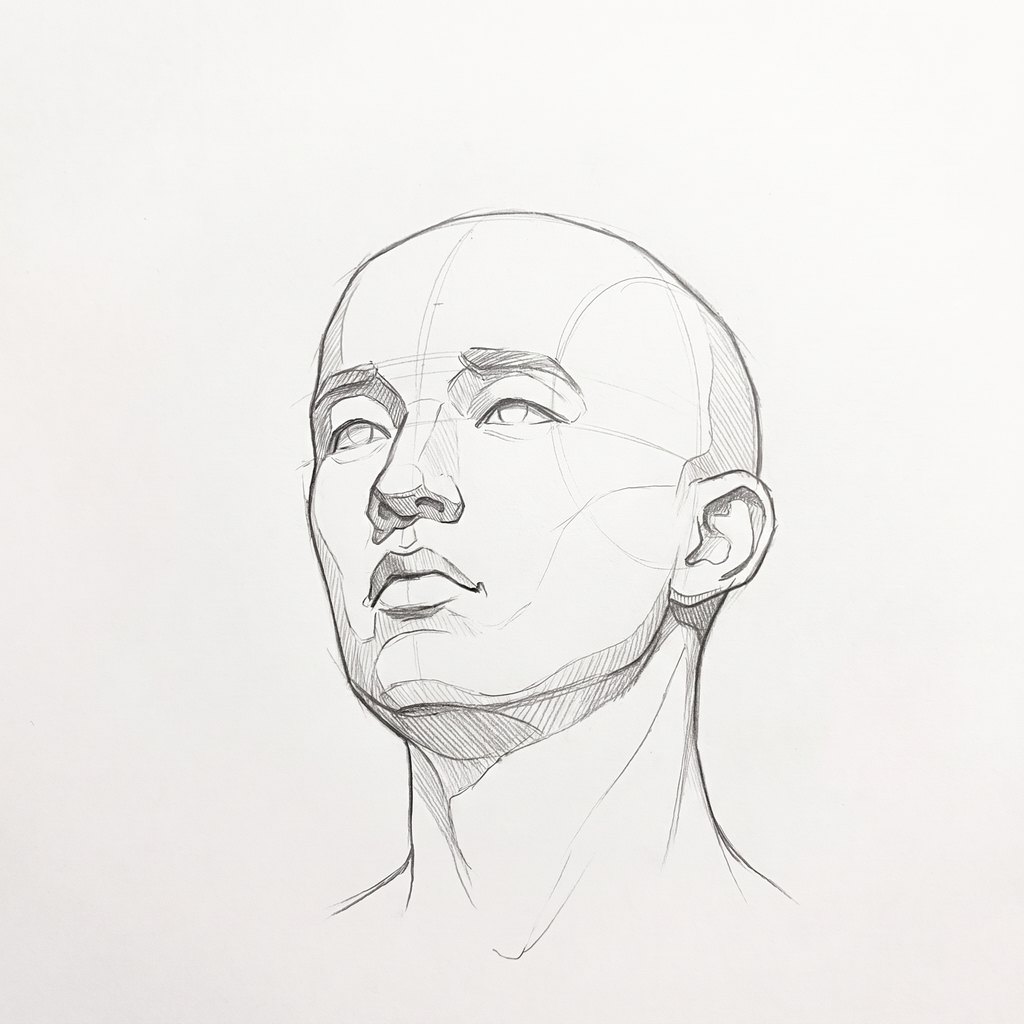
The same head from a level camera, at all sixteen angles: minimal head rotation reference.
Heavy jaw, seen from below
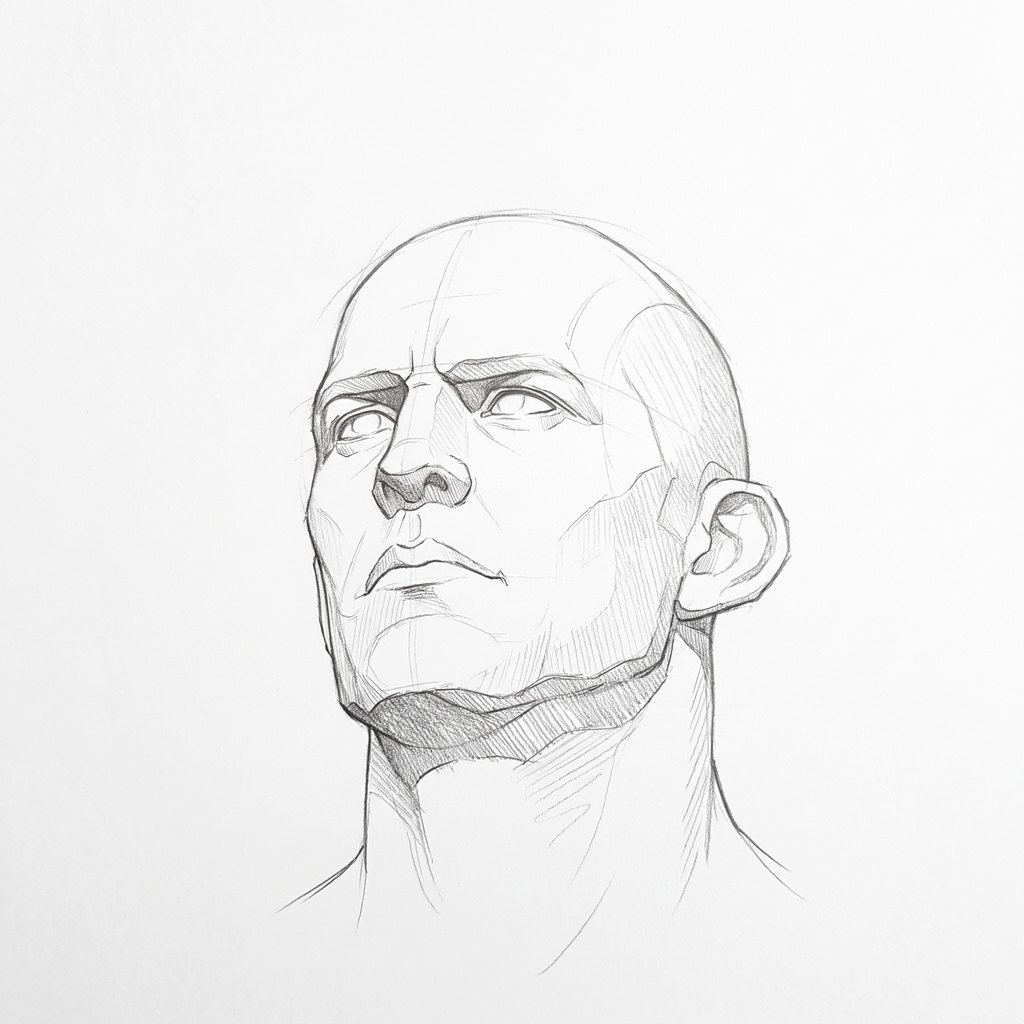
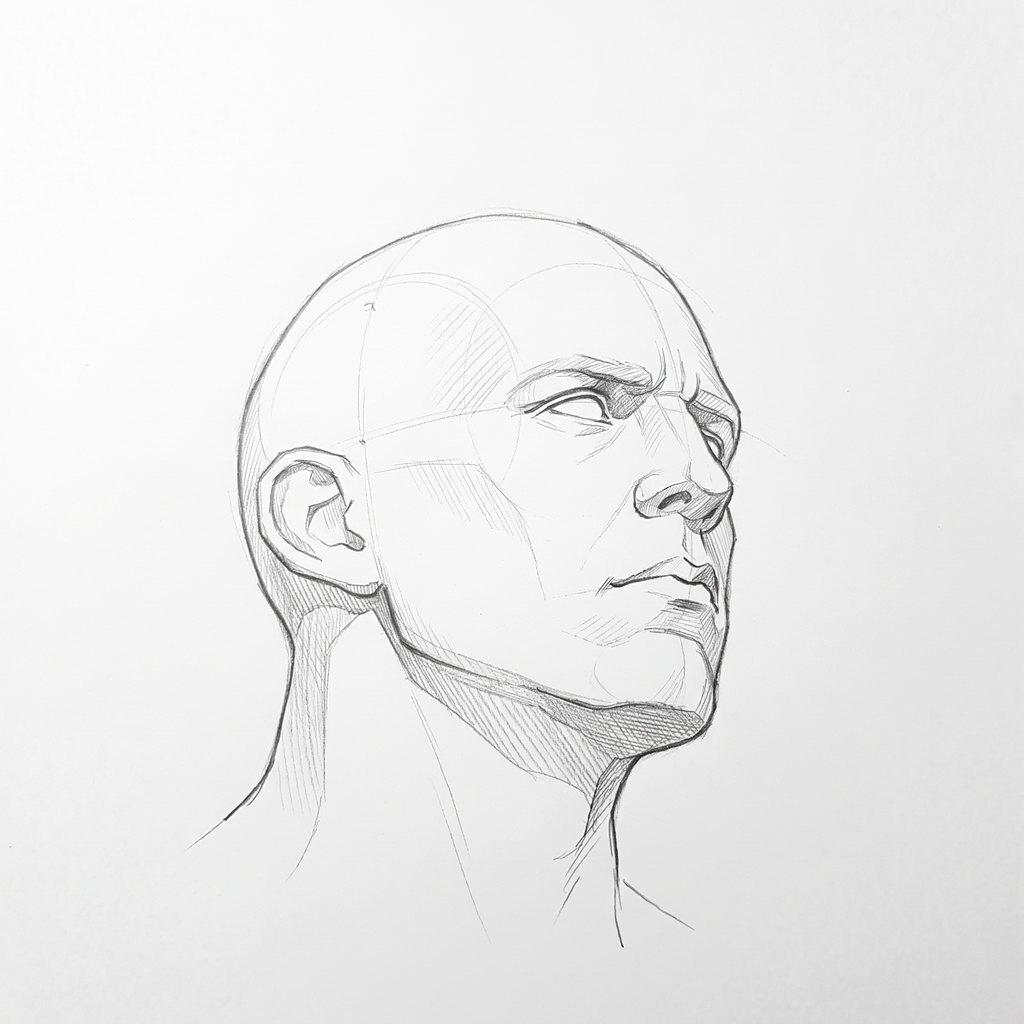
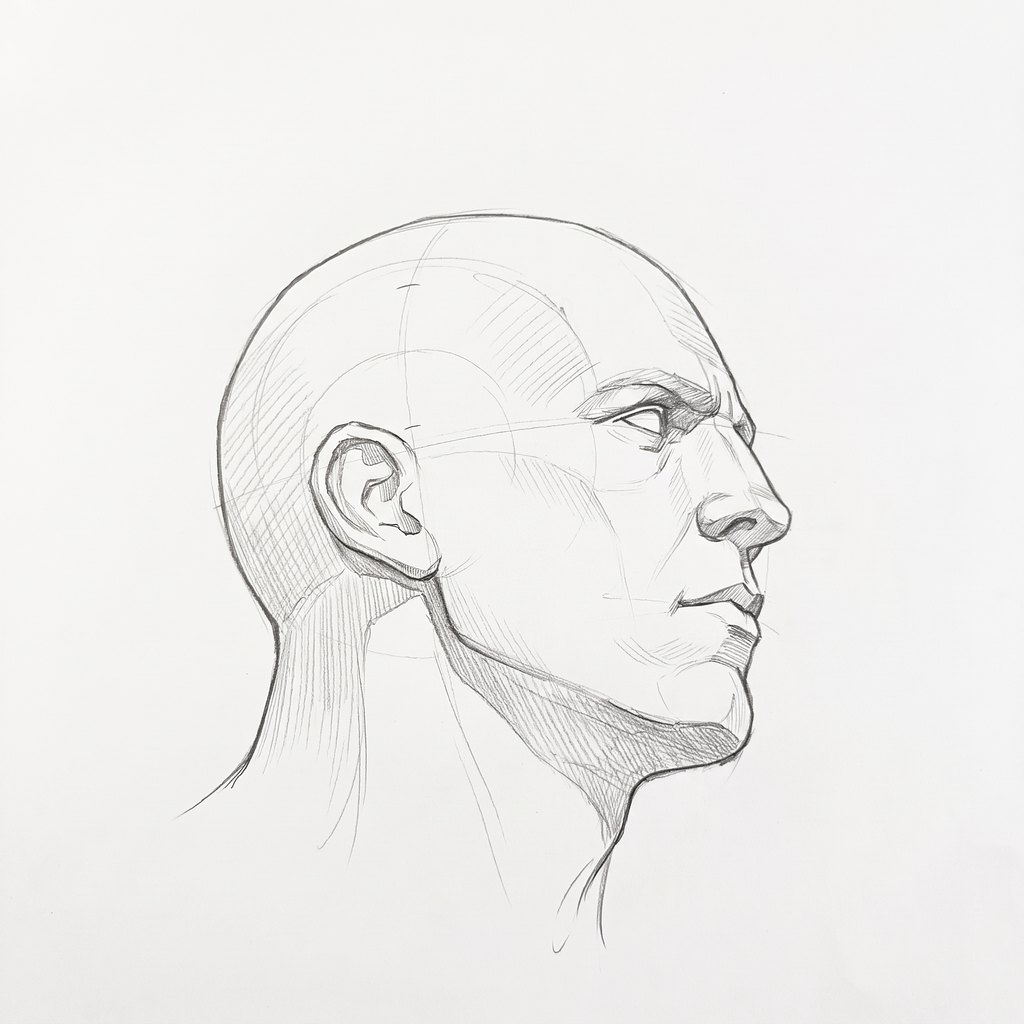
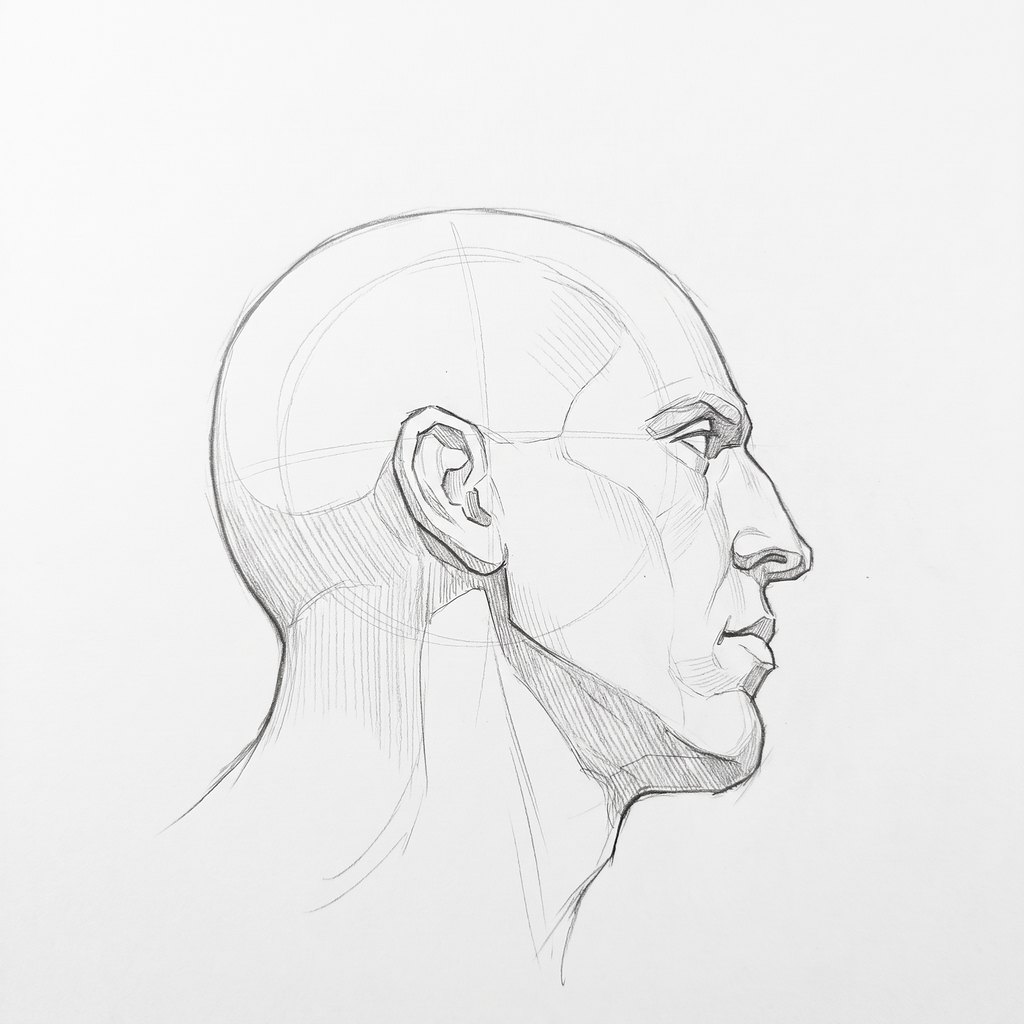
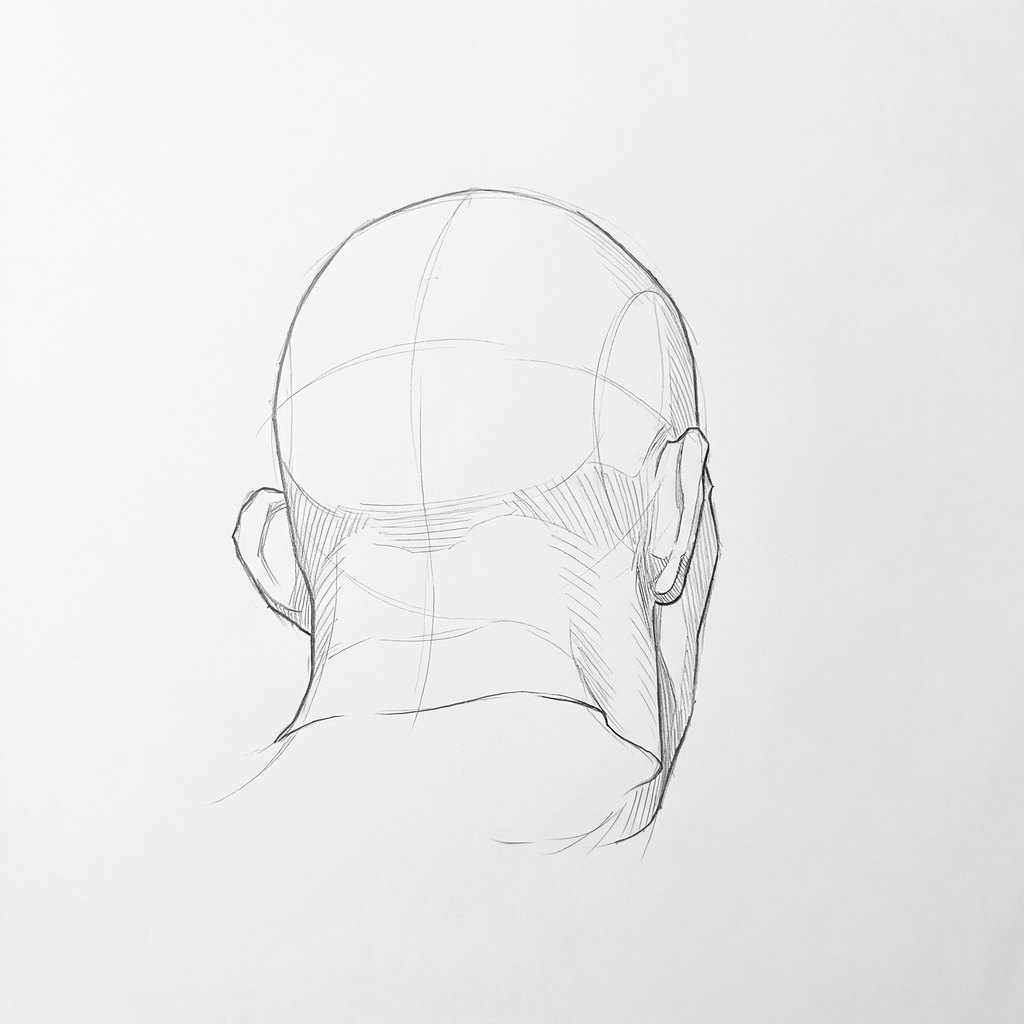
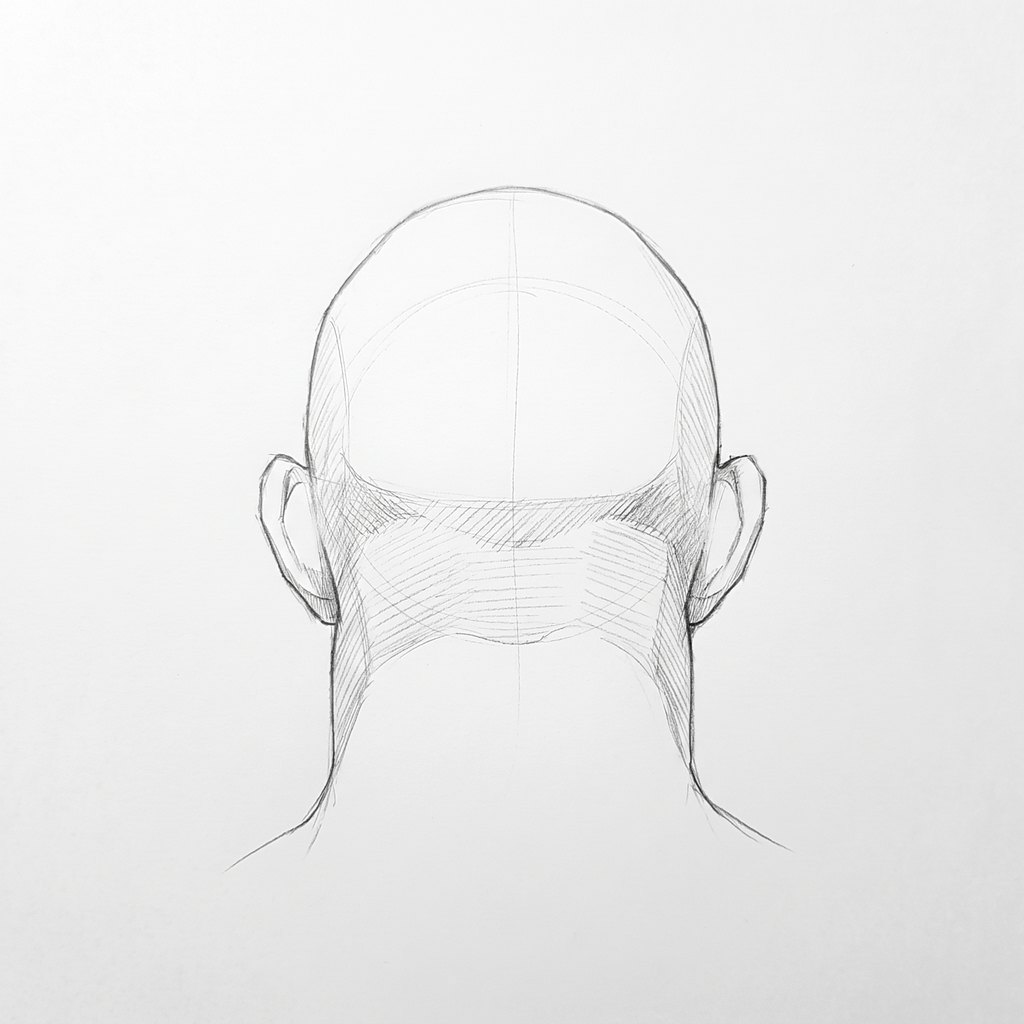
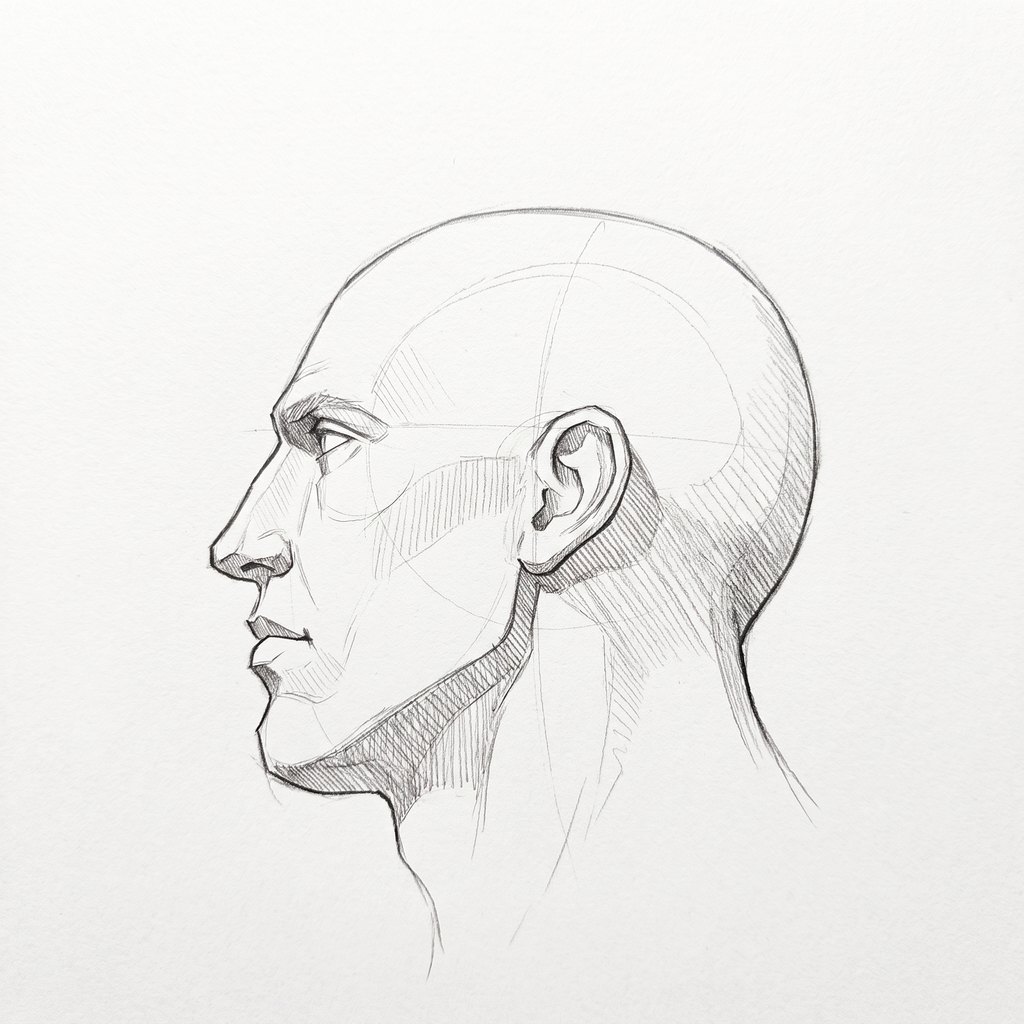
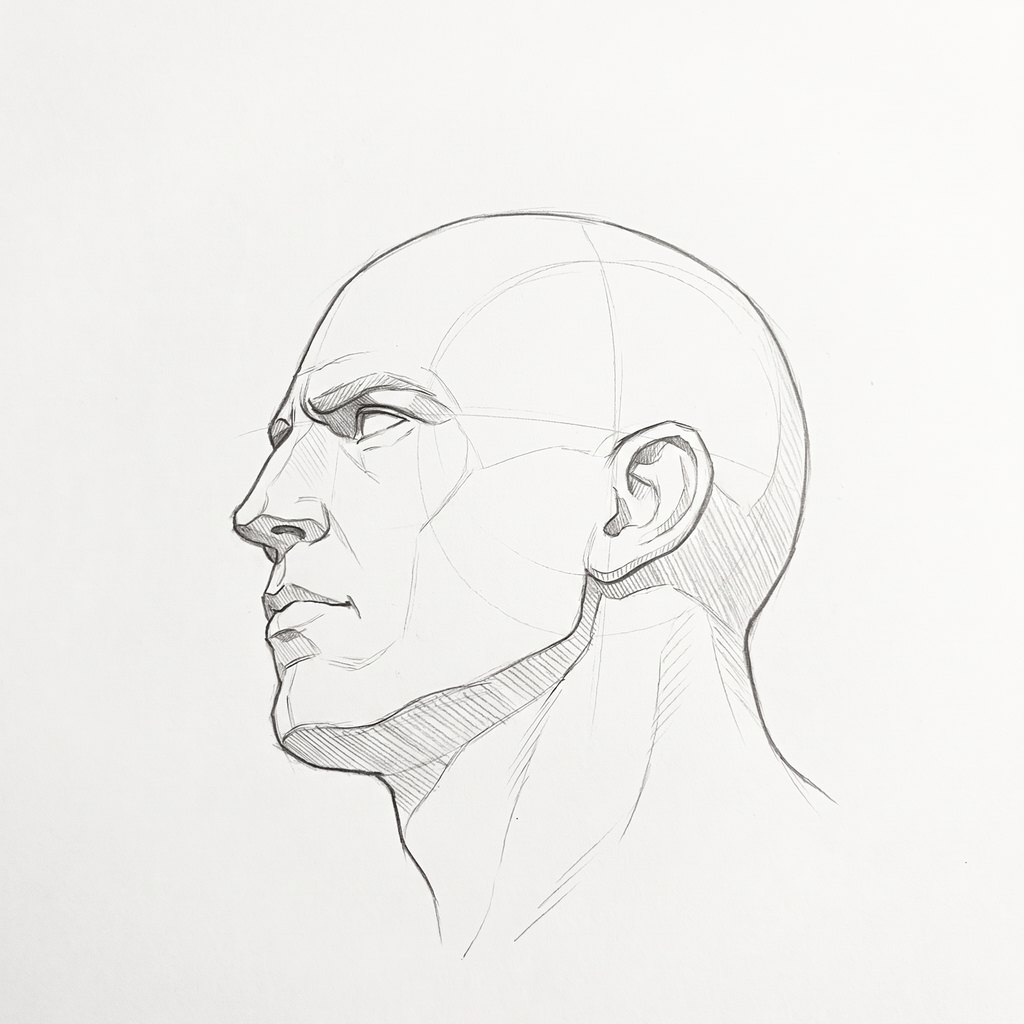
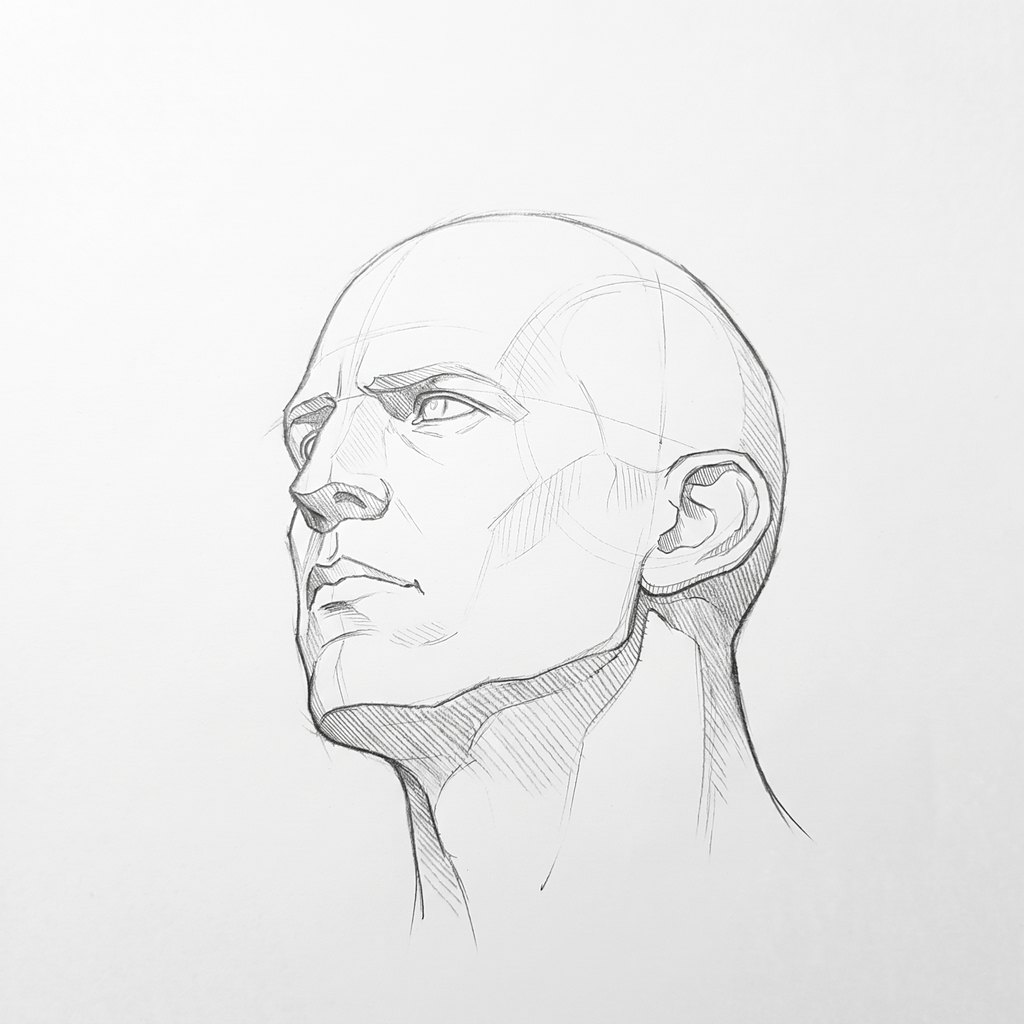
The same head from a level camera, at all sixteen angles: heavy jaw rotation reference.
Using the plates
Put a low-angle plate beside the same angle from the level set and trace the brow line on both. The difference between the two curves is the whole low-angle effect, and once you can draw that curve the features follow it.
The same two heads seen from 20 degrees above: head from above reference.
The construction is drawn step by step, from a level camera, in how to draw the head at any angle, step by step.
Keep drawing
These two heads are also sold drawn from a level camera around the full turn, with turning loops and practice sheets, in head rotation volume 1. The low-angle plates on this page are free.